As I start writing this post, it is one year to the day since my father died.
I’ve never had as significant a loss as this one before. My family is small; many passed away before I was born or old enough to remember them, and outside of that I think I’ve simply been lucky never to have lost anyone suddenly, too young, like this.
Grief is simultaneously a universal and unique experience. Your grief is special, but everybody’s grief is special.
Because I still flirt with the idea of getting back into journalism full-time, I keep this blog (vaguely) open, but today I’m not interested in views or career progression even slightly.
I have missed talking to my father. Having the same conversations over and over again, with the occasional new wrinkle, for years and years and years.
Which means I have been denied decades, decades, of slating what for some is The Beatles’ masterpiece, but for me is one of their lowest ebbs.
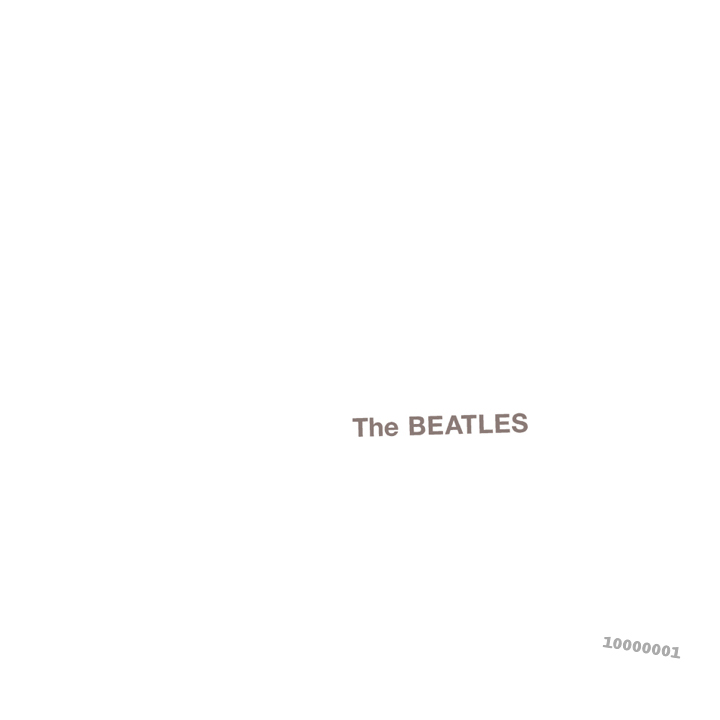
The White Album, as it eventually became known, celebrates its fortieth anniversary this November. It inspired a string of other colour-themed, eponymous records (right up to Weezer churning out another white one a couple of years back). It’s visionary, eclectic, bursting with ideas and it absolutely sucks out loud.
Well… sorta.
A few months ago when I resolved to write this post, I decided I had to give the album at least one more, legitimate, start-to-finish listen so that I knew my opinion hadn’t changed… except it kinda changed.
There’s only one way to do this, and it’s to comb through all. Thirty. Songs.
Strap in.
1. Back in the USSR – On a strangely apolitical album for a time of upheaval, this amusing ode to the girls of the Soviet Union starts things off with momentum; Paul McCartney still plays this now, and so he should.
2. Dear Prudence – One (positive and negative) theme of The Beatles is Paul and John Lennon trying on each other’s styles with mixed success. John was generally thought of, sometimes even now, as the sour one to Paul’s gurning muppet, but ‘Prudence’ is one of his simplest, sweetest songs, originally written in India to encourage Mia Farrow’s sister just to hang out with the gang.
3. Glass Onion – Wrongfooting structure aside (see ‘Bungalow Bill’ for that) ‘Glass Onion’ justifies its opacity by being transparent with gleeful disinformation (‘The walrus was Paul!’).
4. Ob-La-Di, Ob-La-Da – Last summer, only about a month after my father died, I helped supervise a student-led stage show called Yoggle at the Edinburgh Fringe Festival. It ended up being about an eleven-hour drive that, with this particular group of students, kept me nice and distracted, until their iPod shuffle function brought this song up. I have always, always felt that it’s simply a bad song, but the second it came through the speakers last year it became the soundtrack to the hardest thing I’ve ever had to deal with. Not only that, but re-listening with a dim view, I’m starting to wonder if it might be super racist.
5. Wild Honey Pie – This fifty-second non-song definitely deserved inclusion on the album’s first side, almost as much as it deserved to get covered by Pixies once. Shrug.
6. The Continuing Story of Bungalow Bill – Is there a reason why Lennon spends half of this album not bothering with song structures? The wrenching rhythm shifts between every verse and chorus make this virtually unlistenable, sacrificing the relatively pleasing subject matter (criticising a macho hunter) on the altar of weird.
7. While My Guitar Gently Weeps – George Harrison never truly abandoned mystical influences in his compositions, and this one came from pure chance – he decided to write a song based on whatever phrase he found from flipping open a random book. That phrase was ‘gently weeps’ and a musical legend was born. As Lennon and McCartney distanced themselves, Harrison was blossoming as a songwriter, stockpiling greatness, and like so many great songs, ‘Gently Weeps’ has become more trivia point than song. Harrison defiantly invited Eric Clapton along to the tempestuous sessions to (successfully) force the other three to behave themselves and blow the doors off with a solo. Below is a video from after Harrison passed away where Prince joins an all-star cast to absolutely demolish Clapton’s original solo without breaking a sweat. ‘I look at the world and I notice it turning,’ Harrison drones, as one of his greatest ever achievements swirls around him.
8. Happiness is a Warm Gun – The late sixties found Lennon and his muse, Yoko Ono, experimenting with harder and harder drugs. That might explain the lack of attention span displayed here and elsewhere. Unlike ‘Bungalow Bill,’ ‘Warm Gun’ at least has two halves of a great song in here. Shame they ended up mashed together.
9. Martha My Dear – What’s worse about this one? The pleasant but inconsequential melody that could have been applied elsewhere? That it’s partly inspired by one of Paul’s dogs? That it was written as an exercise in complex piano playing and sounds like it?
10. I’m So Tired – After days of meditation Lennon found himself too awake to sleep and too sleepy to engage, and while this almost direct sequel to ‘I’m Only Sleeping’ isn’t the embarrassment some of his other contributions were, it’s nothing to write home about either.
11. Blackbird – No singles were cut from The White Album, but ‘Blackbird’ is basically its very own ‘Yesterday,’ in that decades of being overplayed have robbed it of almost all the shock and awe that its quiet brilliance deserves. Delicate, folksy, acoustic but definitely not twee, if only all the Rishikesh material reached this quality standard.
12. Piggies – Oh, you thought that Harrison somehow escaped the curse Lennon and McCartney’s songwriting was suffering from? ‘Piggies’ is a contender for outright worst Beatles song ever recorded. Most of the other duds on these four sides feel lazy, half-finished or rushed. ‘Piggies’ is a carefully curated assemblage of oinking noises, harpsichord overdubs and even a bloody string section. This took way too much effort to be a mere mistake, and is continued proof that genius definitely isn’t genius all the time.
13. Rocky Raccoon – Lennon and McCartney at times on this album seem to be competing for one-downsmanship. McCartney doesn’t even bother singing the first verse of this wretched country pastiche, a dry run for the kind of down-home, half-finished terribleness that would populate most of his first solo record in 1970.
14. Don’t Pass Me By – Bless poor Ringo. Written many years earlier, he finally got to throw his one solo composition to date into the mix. It’s a big, boxy squaredance of a thing, but it’s unbelievably charming and definitely doesn’t inspire the kind of rage his three bandmates do.
15. Why Don’t We Do It in the Road? – Perhaps it’s difficult many years later to truly understand the cultural relevance of something as cackhandedly crass as this, widely suggested to be another example of Paul trying to ‘do’ John. Frustratingly, the production is absolutely airtight for once, utterly wasting its cheerful piano line.
16. I Will – There are reasons why Lennon is the ‘cool Beatle,’ and songs like ‘I Will’ are part of why. Macca has a knack for incessantly catchy melodies that bond with your very DNA, but he is a frequent casualty of his own twee persona. ‘I Will’ wouldn’t sound out of place near the end of side two of Beatles For Sale, the previous low-point in the Beatle catalogue.
17. Julia – Don’t worry, you’ve not nudged the record deck. This does sound almost identical to ‘Dear Prudence’ at first, but stick with it, because contained within is a (bordering on Oedipal for the time) tribute to his Lennon’s late mother. He’d get much better material out of that grief within two years.
18. Birthday – As the band became more separate, the listening audience were more frequently denied the pearlescent harmonies the band honed in Hamburg. ‘Birthday’ is almost as much of a nothing as ‘I Will,’ but the difference is it genuinely feels fun, and when those vocals show up after a staccato verse or two, nothing else in the world matters.
19. Yer Blues – ‘Yer Blues’ sounds like it was recorded in a cupboard and by most accounts it was. A sardonically humorous account of misery that’s just too slow to dance to, it signals the guitar sound Lennon would use throughout his solo career and weirdly might be one of the most underrated cuts.
20. Mother Nature’s Son – If you’re putting out a double album, and half a song’s runtime is ‘do do do’ and humming, your priorities are screwed, McCartney.
21. Everybody’s Got Something to Hide Except Me and My Monkey – This strange throwback to an earlier sound (don’t try to tell me that lyrics aside you couldn’t chuck this onto Rubber Soul) was actually quite refreshing to hear on my recent listen, only really let down by its incredibly unwieldy title.
22. Sexy Sadie – ‘Sadie’ would become amusingly quaint not long after; at the time seen as a ruthless takedown of the Maharishi with which the band was obsessed, when compared to something like the searing, incandescent ‘God’ or ‘How Do You Sleep?’ it’s just aged badly, and frankly could pass off as one of their contemporaries parodying them.
23. Helter Skelter – Proving Lennon wasn’t the only one with ideas, McCartney practically invents heavy metal in five squalling minutes. It can only sound dated now and definitely wasn’t the first of its kind, but The Beatles weren’t just about innovation, but about feeling which way the wind was blowing and jumping one step ahead. Only a few years earlier, The Beatles were the clean-cut boys you could take home to mother; now they had blisters on their fingers and Lennon’s artless saxophone shrieked in your ears.
24. Long, Long, Long – Harrison for the moment would settle with chucking a gem or two into the mix, and the dreamlike, distant quality of ‘Long, Long, Long’ is definitely of a piece with what would become All Things Must Pass.
25. Revolution I – I’ve long been a proponent of the louder, faster, heavier version of ‘Revolution’ that was the B-side to ‘Hey Jude,’ but the more I compare the two, the more I actually think ‘I’ is the superior of the two. With that cheeky ‘when you talk about destruction/don’t you that you can count me out… in’ lyric to frustrate Lennon’s misguided acolytes further, you’d almost miss the effortless groove, multiple hummable riffs and perfectly timed horn section.
26. Honey Pie – Just like so many times before, McCartney indulges himself on this most self-indulgent of records, it’s yet another pre-War-influenced, music hall confection. Lump them all together and you’ve got a serviceable Paul side project. Here? It fits right in just by not fitting in, really.
27. Savoy Truffle – Although Harrison admitted being more of a guitarist than a lyricist, this is just another example of how badly this record needed an edit. The lyrics are almost entirely based on the names of chocolates, some real, some fake. Next.
28. Cry Baby Cry – Oddly buried late in the game before the whole of side four self-immolates, ‘Cry Baby Cry’ sounds mostly like a Sergeant Pepper b-side, as psychedelic keyboards elbow each other out of the way for room behind Lennon’s vocals. Better than I remember, but doesn’t help my viewpoint of the album as a clearing house rather than an overflow of genius.
29. Revolution 9 – ‘Revolution 9,’ the most bloated part of the band’s most bloated album, and they even had the gall to sequence it second-to-last. It wouldn’t surprise me if a generation of fans didn’t know the next song was there because they yanked the needle away from the record ten seconds into this mess. At nine minutes long, it’s a tenth of the album that could’ve been cut; but nothing else at the time sounded quite like it that was going to get to a mass market. Lennon was trying something here, something he would continue on multiple solo records and live shows in a vain attempt to get avant-garde to cross over into the mainstream. You have to admire the ambition, because like George with ‘Piggies,’ Lennon’s least listenable entry here is probably the one he put the most time and effort into producing.
30. Good Night – Wouldn’t it be hilarious to let Ringo sing the last one? And write it like those old, sentimental ballads he loves so much? Maybe then he’d do a whole album of Tin Pan Alley standards later? Why have you hung the phone up? In all seriousness, Lennon wrote this as a lullaby for his oft-overlooked son Julian and demanded Ringo sing it, and maybe it’s the story behind it that’s changed my mind on today of all days but… maybe this one isn’t so bad.
 Do they have to use drums?